
Microsoft unveils Majorana 2, Quantinuum raises $1.68B in IPO, OQC lands $350M Series C, Quantum Machines and Rigetti Computing hit 99.5% - The week in quantum June 8th 2026
Issue #285

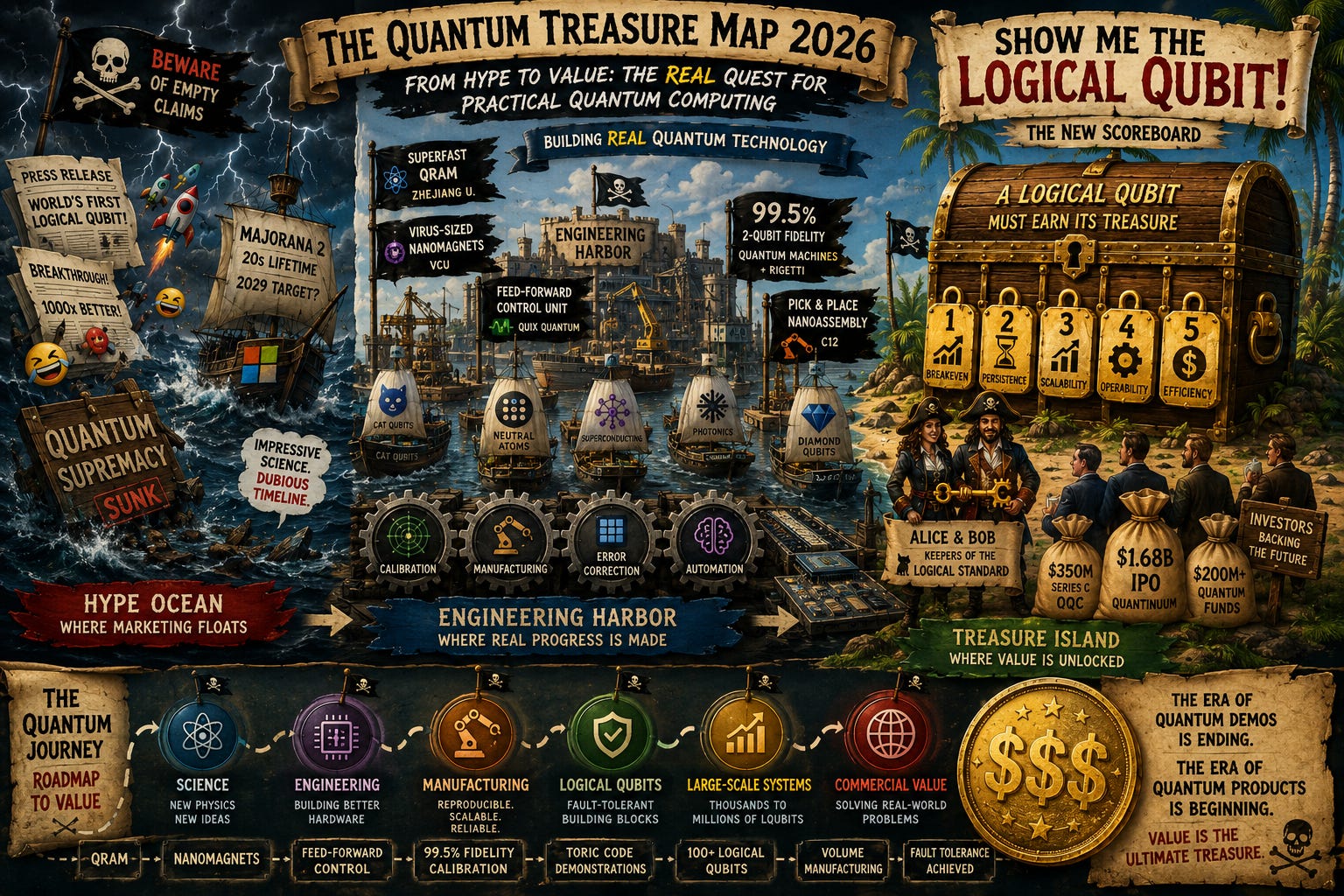
(This time AI made a gorgeous job on the summary image innit?)
Superfast quantum memory, precise virus-sized nanomagnets, and the latest chips and IPOs—let’s separate the credible signal from this week’s quantum computing sector noise. The action starts in the lab, where Zhejiang University researchers claimed a headline-ready “world’s first superfast quantum random access memory.” The experiment, described as a direct strike at the Achilles’ heel of quantum acceleration (that pesky data access bottleneck), promises quantum hardware that doesn’t choke on classical inputs. The Chinese team gave the usual justification—faster QRAM unlocks quantum algorithms’ theoretical speed-ups for tasks like drug discovery—but this one lands with more weight, since every serious architecture builder is stuck with this bottleneck. From hardware fundamental to hardware cleverness: the Virginia Commonwealth University group, led by Jayasimha Atulasimha, showed off diamond qubits paired with nanomagnets roughly 200 nanometers across. The premise: swap electromagnetic monster trucks for virus-sized actuators, enabling accurate quantum state control via acoustic waves. Less space, less energy, and, crucially, a plausible path to scaling. The work’s in Nature Communications, so the engineering is more than hand-waving. Sprinting over to photonics, QuiX Quantum installed its real-time Feed-Forward Control Unit—think rack-mounted, FPGA-driven, 150-nanosecond-latency brains—for their universal photonic quantum computer. The company frames this as a “significant advance” as it moves toward delivery of its first commercial machine. If you’re tracking hardware readiness for industrial or scientific use, this ticks a box nobody should ignore. Meanwhile, in more sobering news for quantum advantage proponents, researchers led by Roman Rausch published new high-precision classical simulations cutting into previous claims of quantum supremacy. This is the obligatory cold shower for anyone still confusing “quantum” with “unbeatable.” On to the money. Quantum Machines and Rigetti Computing report a technical milestone: 99.5% median two-qubit gate fidelity on Rigetti’s Novera quantum processor, driven by the OPX1000 hardware platform and QUAlibrate software. Not only did errors stay low across the QPU, but the setup’s automated calibration and monitoring are already out in the wild at sites like Fermilab and Horizon Quantum. Here is the important part: this is concrete engineering, prime for organizations serious about scale. The industrial chessboard is shifting quickly. Oxford Quantum Circuits secured a $350 million Series C, breaking private quantum raise records in Europe and giving OQC enough dry powder for more international expansion and data center deployments. C12, on the other end of the pipeline, rolled out a “Pick & Place” nanoassembly method for carbon nanotube quantum chips—replacing a glacial, year-long process with a semi-automated production line good for 50 devices in four weeks. Takeaway: whoever solves reproducible, high-volume quantum chip assembly first wins a chunk of the hardware future. If you want to see where real money is betting, Quantinuum grabbed $1.68 billion in a U.S. IPO, off the back of strong investor appetite. The company’s bookings are picking up, but, as the reporting notes, product maturity remains a work in progress. Finally, the press release fog rolls in from Microsoft, with the unveiling of the Majorana 2 quantum chip at Build in San Francisco. Here’s where the signals get fragile. The material switch—lead instead of aluminum, indium arsenide plus indium arsenide antimonide—allegedly brings qubits with 1,000x the reliability and a mean life of 20 seconds. Microsoft now says it’s halved its timeline and eyes a practical, fault-tolerant quantum computer by 2029. Impressive science. Dubious timeline. As always, “practical” remains undefined, and the world will want to see error correction, not just longer-lived qubits. Zoom out: The real game is this—controlled experiments, reliable hardware, automated calibration, and volume manufacturing are starting to converge. Glitzy IPOs and chip demos are noise until they ship products that can actually chew on real workloads. This week, the ecosystem flexed credible science, meaningful technical milestones, and some sharp industrial moves. The implication (backed by multiple stories): Quantum hardware and engineering are moving—slowly, unevenly—toward manufacturable scale. For those counting, that’s real signal in a sea of theater.
What is a logical qubit anyways?
Alice & Bob share their answer in a great paper this week
🏴☠️ The Great Logical Qubit Heist: Alice & Bob Want to End Quantum Marketin
One of the most abused terms in quantum computing today is the phrase "logical qubit." Every few months, another company announces a shiny new logical qubit. Investors cheer. Press releases fly. LinkedIn fills with rocket emojis. The problem? Not all logical qubits are created equal.
This week, French quantum startup Alice & Bob released a surprisingly useful paper: "Defining the Logical Qubit: Five Criteria to Benchmark Logical Qubit Claims." Instead of announcing a new record, they ask a more uncomfortable question: «What exactly qualifies as a logical qubit in the first place?»
Their answer is essentially a pirate's checklist for separating genuine progress from marketing treasure maps.
1. Breakeven: Is the cure better than the disease?
A logical qubit should outperform the physical qubits used to build it. If your error-corrected qubit is actually noisier than the underlying hardware, congratulations: you've invented a very expensive problem. Alice & Bob argue that true breakeven means error correction delivers a measurable improvement, not just a demonstration that the code executes.
2. Persistence: Does it stay alive longer?
A logical qubit should preserve information longer than a physical qubit. This sounds obvious, but many demonstrations focus on isolated metrics while the encoded information doesn't actually survive significantly longer. The whole point of error correction is extending quantum memory. If it doesn't, you're basically putting armor on a pirate ship that still sinks faster than a rowboat.
3. Scalability: Can it grow?
A logical qubit that works only in a carefully crafted laboratory setup is interesting science. A logical qubit that can be replicated thousands or millions of times is useful engineering. The paper stresses that logical qubits must demonstrate a credible path toward larger code distances and larger systems. Otherwise, they are scientific curiosities rather than building blocks.
4. Operability: Can you actually compute with it?
A memory is not a computer. Logical qubits need logical operations, logical gates, measurements, initialization, and all the machinery required to execute algorithms. A perfectly protected qubit that cannot participate in fault-tolerant computation is like owning the world's safest treasure chest without a key.
5. Resource Efficiency: How much treasure does it consume? This may be the most important criterion of all. If creating one useful logical qubit requires millions of physical qubits, the architecture may never become economically relevant. Alice & Bob argue that hardware overhead matters as much as logical performance. A practical quantum computer isn't just about achieving fault tolerance—it's about achieving it at a scale humans can afford.
The Pirate Take
This paper is less about Alice & Bob's cat qubits and more about bringing discipline to a field that desperately needs common definitions. The quantum industry is entering a new phase where simply counting physical qubits is no longer enough. I other words: get out of the lab and your quantum supremacy claims and show me business testable, provable value added into the industry. Not point solutions isolated that break down when added into a true enterprise pipeline. A&B has always taking such approach, from their cats, their marketing and publications (and that's why I love their work).
So, on logical qubit the real question becomes: How really good are those qubits? Alice & Bob's five criteria provide a useful benchmark for investors, customers, and quantum enthusiasts trying to navigate an increasingly noisy sea of announcements. The era of "we built a logical qubit" is ending. The era of proving that your logical qubit actually matters has begun. (Link to paper below 👇)
Quantum Bits with Quantessa & Atomique
Laser Cooling
Latest strip published June 7, 2026 · by Yuval Boger
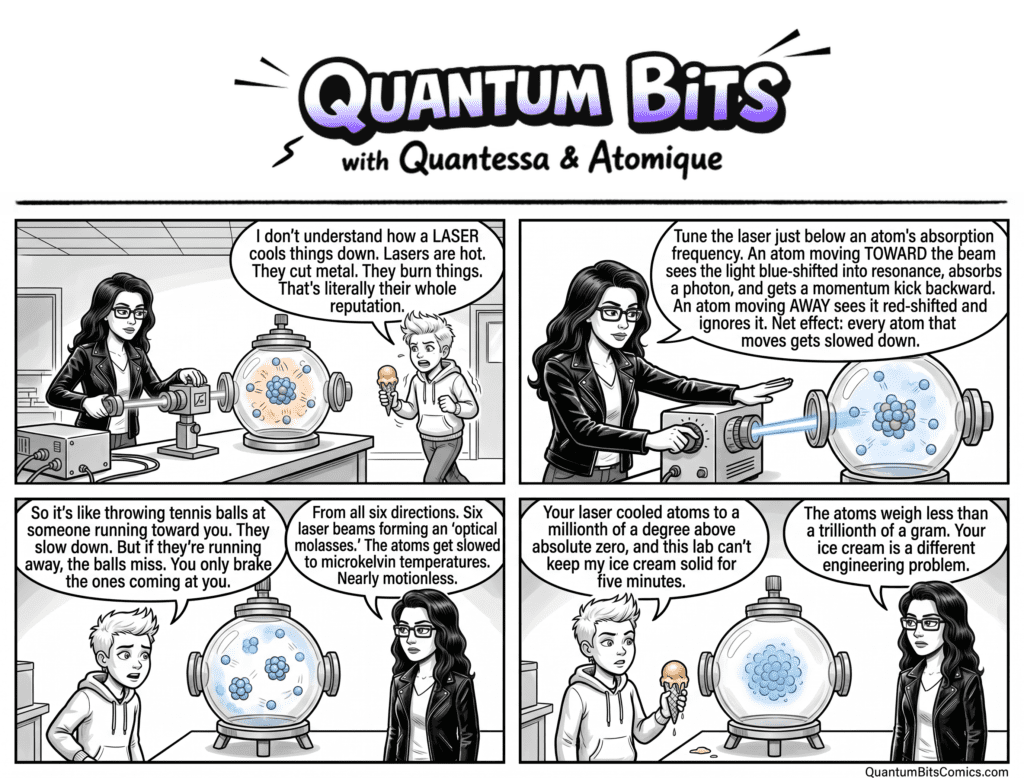
Atoms at room temperature move at hundreds of meters per second, far too fast to serve as qubits. To use individual atoms for quantum computing, scientists must slow them almost to a standstill. Laser cooling is the primary technique for The post Laser Cooling first appeared on quantumbitscomics.com .
Read the full comic on Quantum Bits Comics
[PAPER] Fuzhou University team fuses quantum circuits with spiking networks for anomaly detection—98.7% accuracy on MVTec benchmark, but drops to 88.9% without decoherence controls; impressive numbers, fragile guts
Industrial Internet of Things (IIoT) anomaly detection imposes concurrent requirements for temporal consistency, computational latency control, and representation of high-dimensional heterogeneous sensor data. When tested on the MVTec Anomaly Detection dataset, the model achieves classification accuracy of 98.7% with 512 logical quantum–spiking units and an inference time of 3.29 s. The effect of each component is estimated via ablation study – eliminating the Quantum Neurons for Sensor Data Fusion module leads to classification accuracy of 92.5%, whereas elimination of the Quantum Decoherence Management for Reliable Processing module produces the lowest classification accuracy of 88.9%.
[PAPER] Microsoft claims parity-stabilized Majorana chip hits 20-second quantum state lifetime—evidence climbs, but functional qubits remain MIA
![[PAPER] Microsoft claims parity-stabilized Majorana chip hits 20-second quantum state lifetime—evidence climbs, but functional qubits remain MIA](https://substackcdn.com/image/fetch/$s_!zXGN!,f_auto,q_auto:good,fl_progressive:steep/https%3A%2F%2Fsubstack-post-media.s3.amazonaws.com%2Fpublic%2Fimages%2F062c8ef9-ade4-4943-a6f6-c0b6eef5689a_1066x600.jpeg "[PAPER] Microsoft claims parity-stabilized Majorana chip hits 20-second quantum state lifetime—evidence climbs, but functional qubits remain MIA")
Majorana 2 is Microsoft’s latest topological quantum computer chip. The chip, called Majorana 2, is an updated version of the highly controversial Majorana 1 chip that was unveiled last year . The paper, which is yet to be peer reviewed, reports that the chip’s qubits — a quantum computer’s equivalent of a computer’s bits — are able to hold information for more than 20 seconds, which is 1,000 times longer than the qubits in its predecessor.
Microsoft unveils Majorana 2 quantum computing chip and sets goal for practical quantum computer by 2029
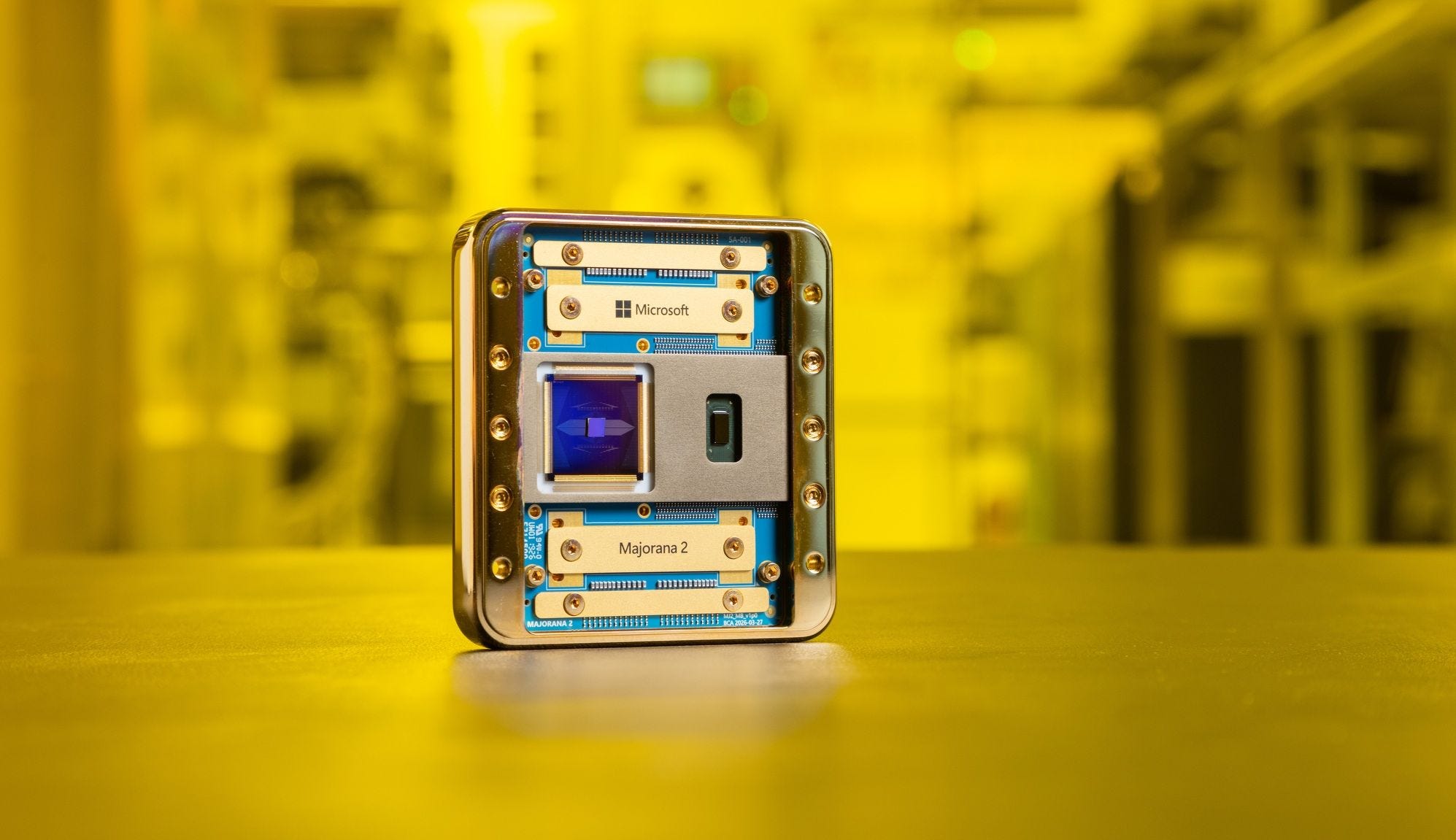
At its Build conference in San Francisco, Microsoft unveiled its next-generation quantum computing chip, Majorana 2. The chip features significant material improvements over the previous Majorana 1, using lead instead of aluminum for its superconductor and a combination of indium arsenide and indium arsenide antimonide in the semiconductor region, resulting in qubits that are claimed to be 1,000 times more reliable and with a mean lifetime of 20 seconds. Chetan Nayak stated that this progress has enabled Microsoft to halve its timeline and target the release of a practical, fault-tolerant quantum computer by 2029.
Virginia Commonwealth University researchers develop nanomagnet-based technique to control quantum bits

Researchers at Virginia Commonwealth University, led by engineering professor Jayasimha Atulasimha, have advanced quantum computing hardware by using nanomagnets as small as viruses to control the spin of electrons in diamond-based qubits. Their study, published in Nature Communications, demonstrates that pairing these 200-nanometer-wide magnets with diamond qubits enables precise quantum state control using acoustic waves. This technique could reduce the space and energy required for quantum computing hardware, improving scalability and potential for real-world application.
Alice & Bob publish definition of a logical qubit paper
One of the most abused terms in quantum computing today is the phrase "logical qubit."
Every few months, another company announces a shiny new logical qubit. Investors cheer. Press releases fly. LinkedIn fills with rocket emojis. The problem? Not all logical qubits are created equal.
This week, French quantum startup Alice & Bob released a surprisingly useful paper: "Defining the Logical Qubit: Five Criteria to Benchmark Logical Qubit Claims." Instead of announcing a new record, they ask a more uncomfortable question: what exactly qualifies as a logical qubit anyways?
QuiX Quantum installs real-time Feed-Forward Control Unit for universal photonic quantum computer
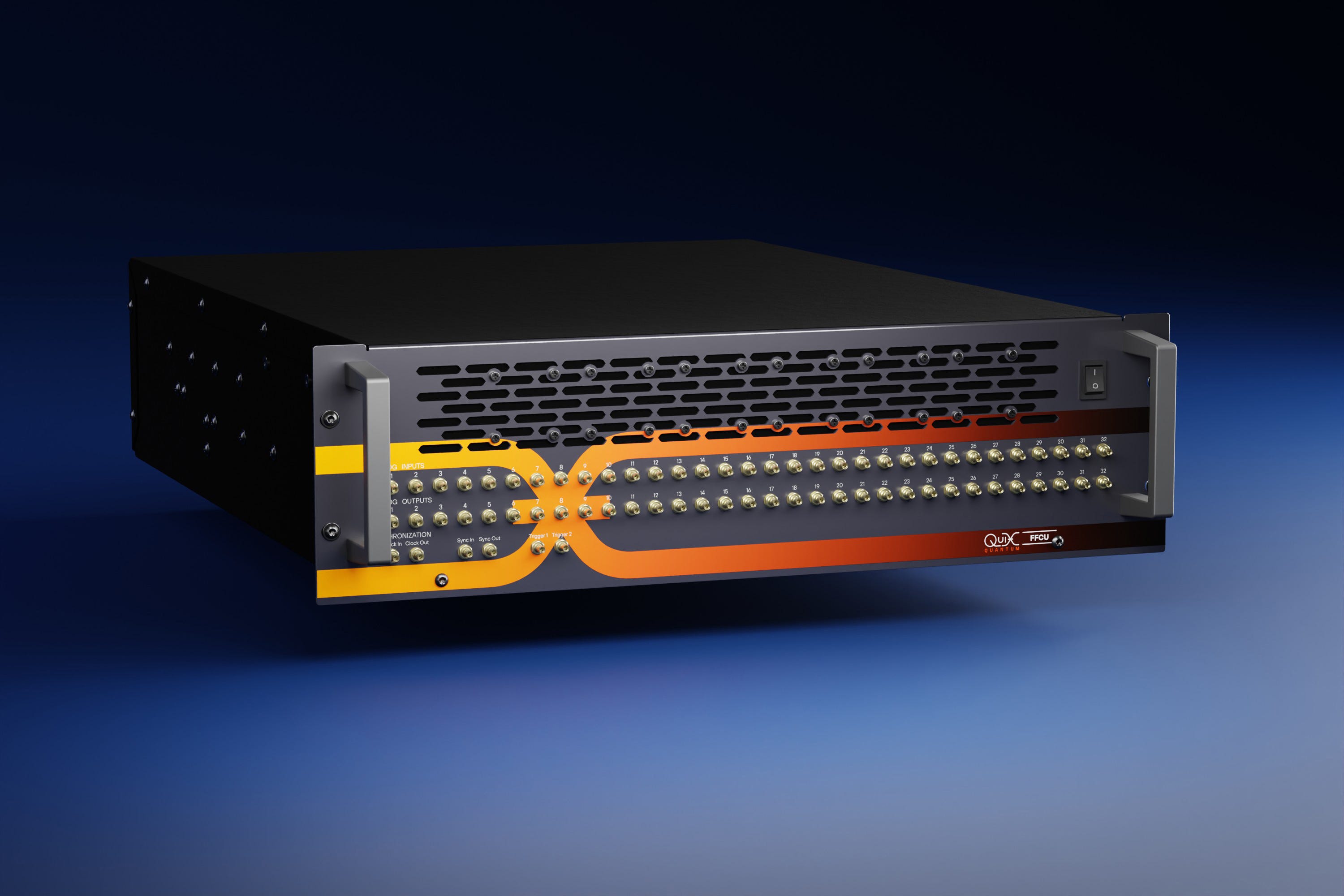
QuiX Quantum has announced the installation of its Feed-Forward Control Unit (FFCU), a real-time controller designed for its universal photonic quantum computing architecture. The rack-mounted FFCU system features two FPGA modules, 32 inputs/outputs, and a latency of approximately 150 nanoseconds. The installation marks a significant advance for QuiX Quantum as it prepares to deliver its first-generation universal quantum computer, aiming to support a broad set of quantum algorithms for scientific and industrial applications.
Zhejiang University team creates world’s first superfast quantum memory for quantum computers
Chinese scientists from Zhejiang University have developed the world’s first superfast quantum random access memory (QRAM), addressing a crucial bottleneck for quantum computers by providing efficient access to classical data. The new quantum memory is expected to significantly accelerate tasks involving massive data processing, which is essential for applications like drug discovery and fraud detection. The QRAM breakthrough is identified as a core advancement required for general-purpose quantum computing, enabling quantum algorithms to achieve their theoretical speed-ups.
Quantum error correction with the toric code by Atom Computing
Quantum computing platforms based on arrays of tweezer-confined neutral atoms have recently emerged as a competitive modality thanks to a direct path toward high qubit count, rapidly advancing operation fidelities, and their ability to execute circuits with arbitrary qubit connectivity. These features will enable the use of efficient error correction schemes with high encoding-rates, time-efficient decoding, and resource-efficient architectures based on transversal gates. With these goals in mind, recent state of the art neutral atom demonstrations focus on the transition from the use of physical qubits to error-corrected logical qubits, but to date there has been no demonstration of repeated error correction scalable to arbitrary depth. Here, we demonstrate many cycles of syndrome extraction in a toric quantum error correcting code, using mid-circuit measurement and replacement of lost qubits, including reloading of a qubit reservoir for indefinite coherent operation. We characterize the logical error rate after up to 90 cycles, showing that logical information can be preserved through multiple rounds of qubit reloading. Comparing two distances of the code up to 8 rounds of syndrome extraction shows a lower absolute logical error rate for the larger distance code.
U.S. Army Research Laboratory scientists demonstrate quantum sensor capable of 3D radio-frequency field detection
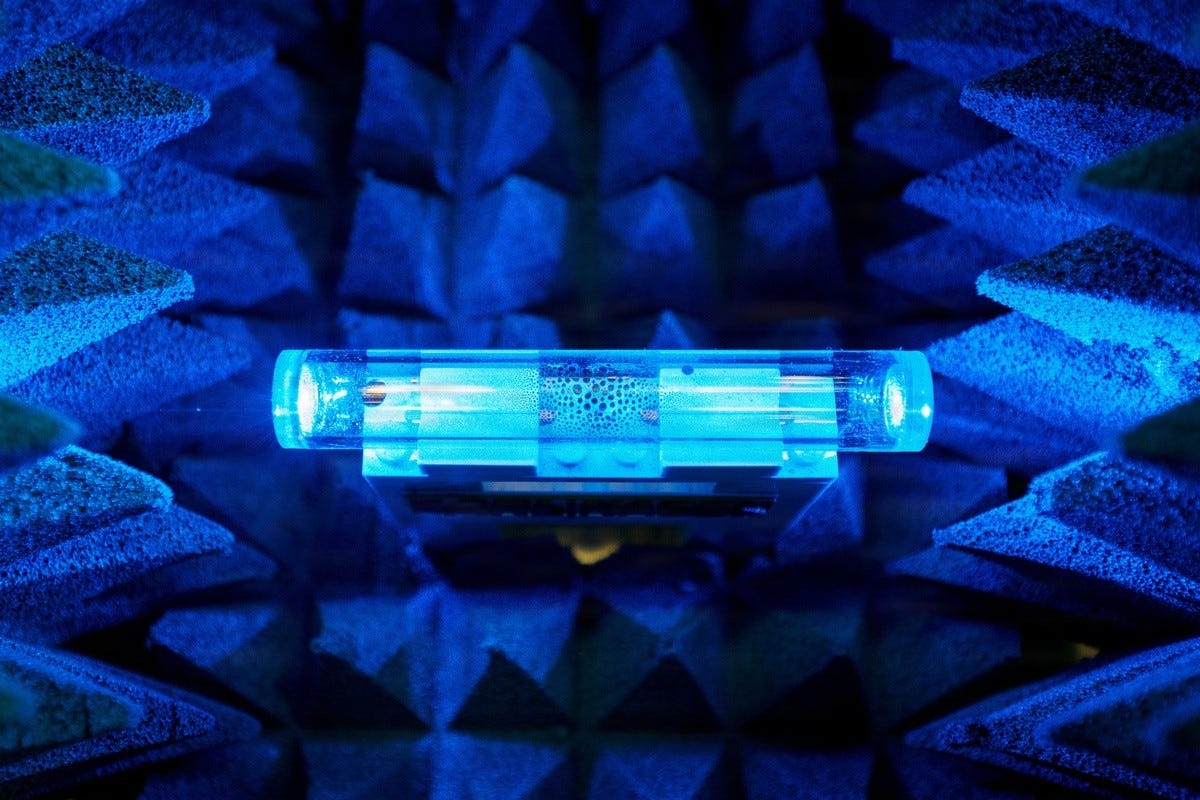
For the first time, scientists at the U.S. Army Combat Capabilities Development Command, known as DEVCOM, Army Research Laboratory demonstrated a quantum sensor that can measure the full 3D direction of radio-frequency electromagnetic fields. This breakthrough could provide the Army with tools to improve situational awareness, enhance secure communications and enable faster, more informed decision-making on the battlefield.
Quantum Machines achieves 99.5% median two-qubit gate fidelity on Rigetti’s Novera quantum processor with OPX1000 platform
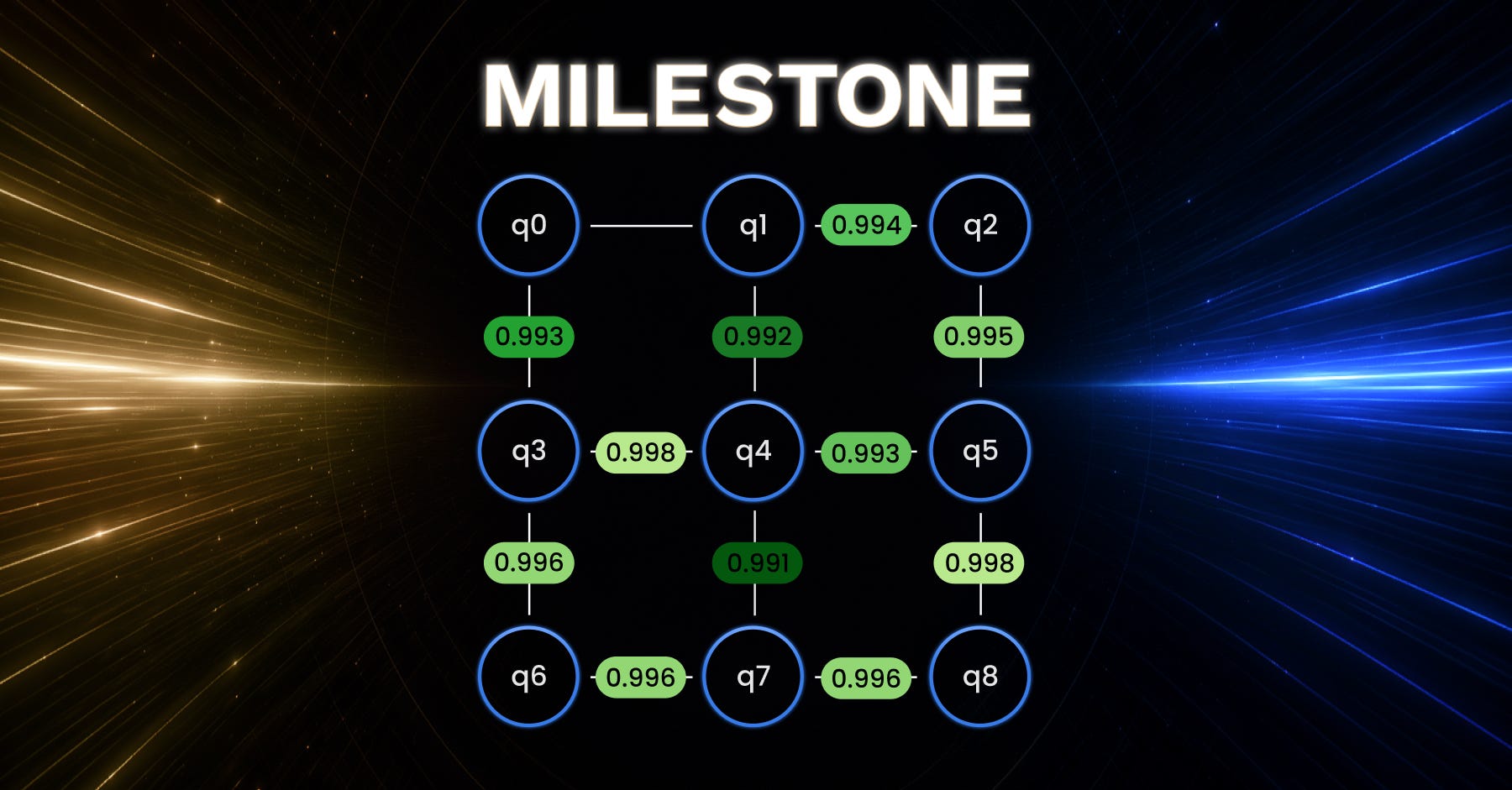
Quantum Machines has achieved a 99.5% median two-qubit gate fidelity on Rigetti Computing’s Novera superconducting QPU using its OPX1000 hardware and QUAlibrate software. The demonstration was achieved during onsite calibration and operation at Rigetti, maintaining consistent low error rates across all qubits. The OPX1000 platform’s automated calibration, real-time optimization, and performance monitoring support scalable high-fidelity deployments at organizations including Fermilab, Montana State University, and Horizon Quantum.
D-Wave Quantum announces gate-model roadmap targeting 100 logical qubits with fault tolerance by 2032
Targeting 100 logical qubits capable of successfully performing over one million operations by 2032, the roadmap combines D-Wave’s expertise in high-coherence dual-rail qubits and quantum error correction, with its proven ability to engineer, scale and commercialize superconducting quantum systems. In contrast to many other gate-model hardware modalities that cannot detect qubit errors, D-Wave’s dual-rail qubits are designed to identify approximately 90% of errors as they occur to dramatically lower the number of physical qubits required to perform error correction.
Oxford Quantum Circuits secures $350 million Series C to expand quantum computing services
Oxford Quantum Circuits (OQC), a UK-based scaleup developing quantum computers with superconducting qubits, has secured a $350m (£260m) Series C funding round, the largest ever for a private quantum computing company in Europe. The round was led by Bullhound Capital, with substantial participation from investors across Europe, the US, and Asia. OQC has deployed quantum systems in data centres in London, Tokyo, and New York, and sold a system to Spain’s CESGA.
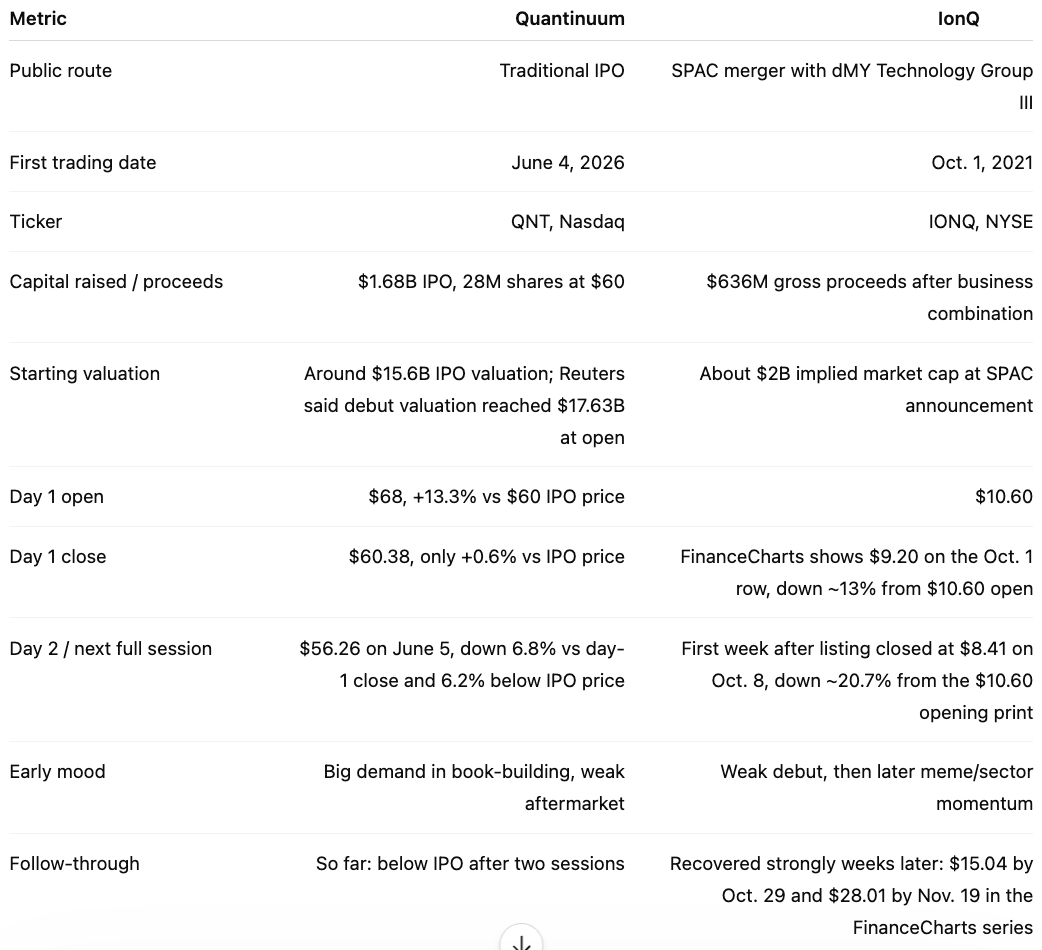
Quantinuum raises $1.68 billion in U.S. IPO. Pricing shares at $60 each
Honeywell’s Quantinuum has raised $1.68 billion in its U.S. initial public offering after pricing shares at $60 each, attracting strong investor interest in the rapidly growing quantum computing sector. The company sold 28 million shares in the offering and will begin trading on the Nasdaq under the ticker ‘QNT.’ Quantinuum, formed in 2021 from the merger of Honeywell’s quantum business and Cambridge Quantum, remains in the early stages of commercial growth but has seen accelerating bookings recently.
How did this IPO compare with IonQ? (I know, apples with apples but still interesting)
C12 launches Pick & Place nanoassembly for high-precision carbon nanotube quantum chip manufacturing
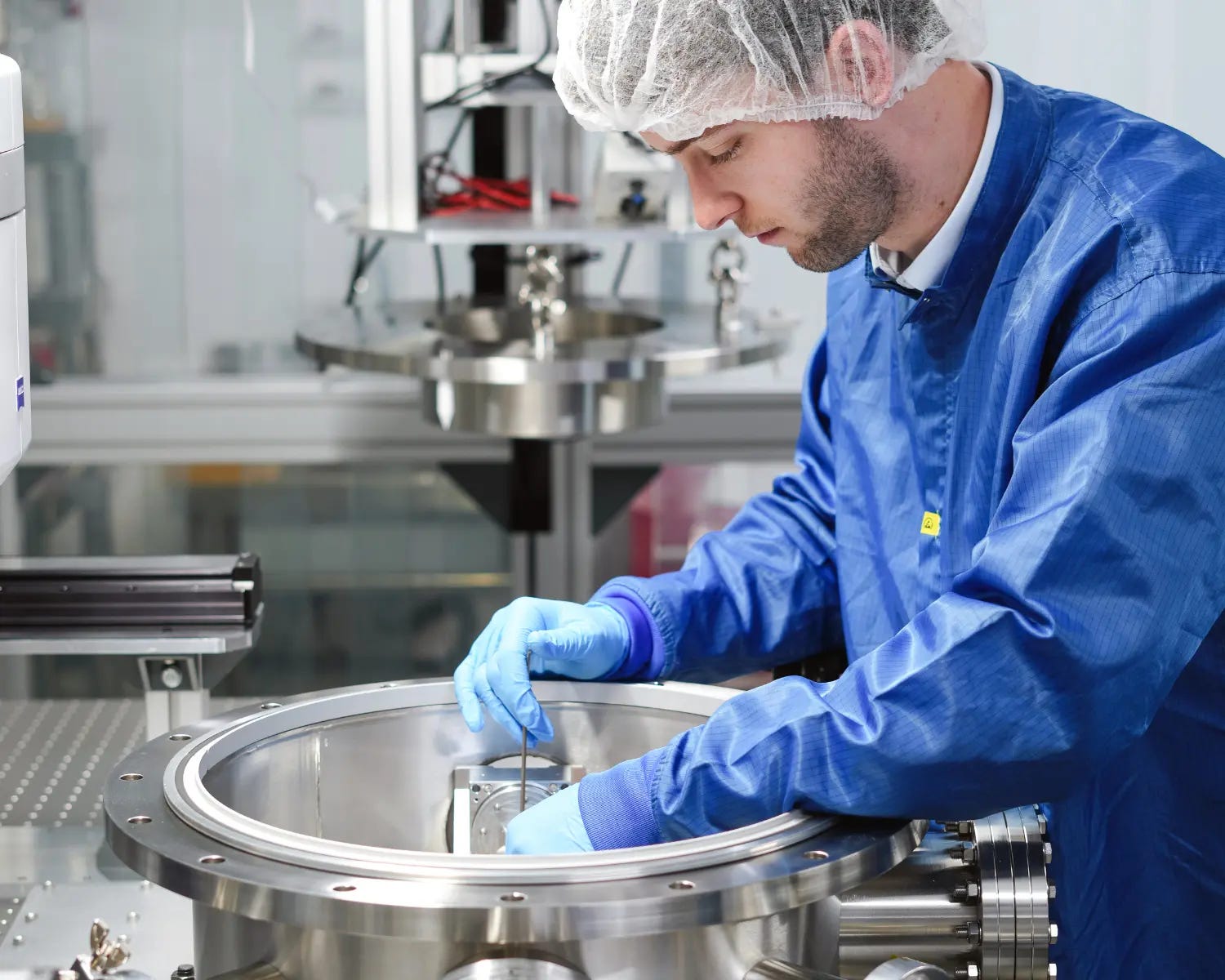
C12 has announced ‘Pick & Place,’ a patented nanoassembly process that transfers individual carbon nanotubes onto quantum chips with micrometric precision. This process decouples nanotube growth from chip fabrication and enables preselection and qualification of nanotubes before their integration, addressing qubit variability and improving quality control. With partial automation, C12 increased its throughput to 50 devices in four weeks, compared to a year with its previous method, illustrating a major advance in manufacturing efficiency.
OQC, JPMorganChase, and AMD launch research collaboration on dedicated Quantum-AI platform in London
JPMorganChase and AMD Commence Research Collaboration to Develop New Quantum-AI Platform in London. Research integrates OQC GENESIS with AI and high-performance classical computing with JPMorganChase’s industry-leading quantum and AI R&D. The Quantum-AI Data Centre, built by OQC in London. The partners will use the platform to conduct research on the application of near-term quantum and hybrid quantum-classical computing including areas such as portfolio optimization and expanding explorations around quantum machine learning, while also developing specialized AI models to improve quantum circuit performance.
SEALSQ Corporation acquires Miraex SA to complete its quantum sovereign technology stack and boost space-based quantum infrastructure
SEALSQ has acquired entire issued share capital of Miraex SA. The investment has been made using the Company’s Quantum Fund, SEALQUANTUM.com, an internal strategic investment initiative of SEALSQ using a dedicated allocation of our cash with the goal of accelerating the development of a fully integrated Quantum Vertical Sovereign Stack. The Quantum Fund has total approved capital resources of $ 200 million, of which over $65 million has already been deployed in several projects (including Miraex). Built around a proprietary Thin Film Lithium Tantalate (TFLT) Photonic Integrated Circuit (PIC) platform, Miraex's technology enables the conversion of quantum information between microwave frequencies (the operating domain of superconducting and semiconductor spin based quantum processors) and optical frequencies (the medium of choice for quantum communication), a foundational capability without which distributed quantum architectures cannot function at scale.
Amazon Braket makes Rigetti Cepheus-1-108Q 108-qubit superconducting quantum device generally available
Amazon Braket enables customers to design and run quantum algorithms on a broad selection of quantum hardware through a unified interface. On April 7, 2026, we expanded the hardware available on Braket with the general availability of Rigetti Computing’s Cepheus-1-108Q, a 108-qubit superconducting quantum processing unit (QPU). Cepheus-1-108Q is the first gate-based quantum device with more than 100 qubits available on Amazon Braket. It replaces the Ankaa-3 system and represents the third generation of Rigetti hardware on the service. The device is built using Rigetti’s proprietary multi-chip architecture that tiles twelve 9-qubit chiplets into a single processor. It is physically located in the United States and available through the US West (N. California) Region.