
Quantinuum, Origin Quantum Wukong, PQC, Quobly - The Week in Quantum Computing, June 22nd 2026
Issue #287

This week, quantum’s signal comes from the science bench—ambitious architectures, foundational theory, even a post-quantum shield—while the industry’s speculative storylines keep their foot on the funding pedal and their eyes on deployments that sound impressive, if just out of reach. The actual advance with the sharpest equations arrived from MIT and the University of Ferrara. Their researchers published a new mathematical framework in Physical Review A that translates quantum states of light into algebraic varieties. That’s a mouthful, but here’s the real claim: it allows precise design and differentiation of non-Gaussian quantum states via photon addition and subtraction, which are routine in today’s labs. Why care? Distinguishability of quantum states underpins real applications in sensing, comms, and computation. The math brings theory closer to the business end of lab reality. On the heavy hardware side, Quantinuum flexed with its Helios machine—98 barium-137 trapped ions, all-to-all connectivity with a rotatable storage ring, and two-qubit gate fidelities of 99.92%. The benchmarks, including random circuit sampling, demonstrate operations beyond classical simulation. The real: this set-up merges elegant physics (trapped ions, QCCD) with engineering muscle (scalable lasers). The catch is always scale and stability. China’s Origin Wukong superconducting quantum computer also re-entered the chat. Over two years, it’s quietly become a workhorse—one million+ computing tasks, 49 million remote visits from 192 countries. But the pivot here is in security: Origin Wukong demonstrated a post-quantum cryptography (PQC) framework called Origin Rock, deployed across enterprises and public institutions, built specifically to withstand both quantum and classical attacks. That’s dual-stack compute and security, not just press release dressing. More on this in industry. Funding froth was thick this week, starting with Quobly’s €115 million Series A to drag silicon-based quantum hardware down the well-trodden industrialization path. Shipping a commercial system (“Alloy”) via the cloud by the end of 2026 was mentioned. Signal: there’s genuine appetite to scale with silicon, leveraging the existing semiconductor ecosystem. Noise: commercialization claims have a tendency to slip. QuEra Computing announced Libra, its first fault-tolerant quantum computer, slated for 2028, and expanded its Amazon Web Services partnership. Libra aims for over 256 logical qubits, a million reliable logical quantum operations, and a logical error rate of 10⁻⁶—encouraging for anyone needing molecular simulation horsepower. Here is the important part: all this is roadmap talk; the system will run on Amazon Braket *if* it shows up in 2028. Atom Computing and Nu Quantum put pen to paper on a partnership for utility-scale quantum computers, mingling neutral-atom processors and photonic networking. Ambitions: fault-tolerant, distributed architectures. Nu Quantum’s prior $60 million Series A for photonics backs up some of the engineering optimism. Meanwhile, in the high-noise quantum security market, IonQ rolled out Clavis XG Multiplex—quantum key distribution for metropolitan fiber networks that works on existing lines and can run classical and quantum data together. Removing the need to redesign fiber infrastructure could tip QKD from science project to deployable product—at least, for organizations swimming in sensitive data. Finally, South Korea’s INNOSPACE and Norma are launching their quantum ambitions literally: a memorandum to demonstrate Norma’s quantum processing hardware in orbit, paving the way for a space-based Quantum Computing Center. Quantum in space is a niche bet, but the plan is to get direct operational data, not just headlines. When you sort the science from the theater this week, one implication stands out: quantum platforms are moving from isolated hardware experiments to integrated systems with real security frameworks and ambitions of genuine scale—though every claim to “commercialization” still deserves a close squint.
Quantum Bits with Quantessa & Atomique
Surface Codes
Latest strip published June 21, 2026 · by Yuval Boger
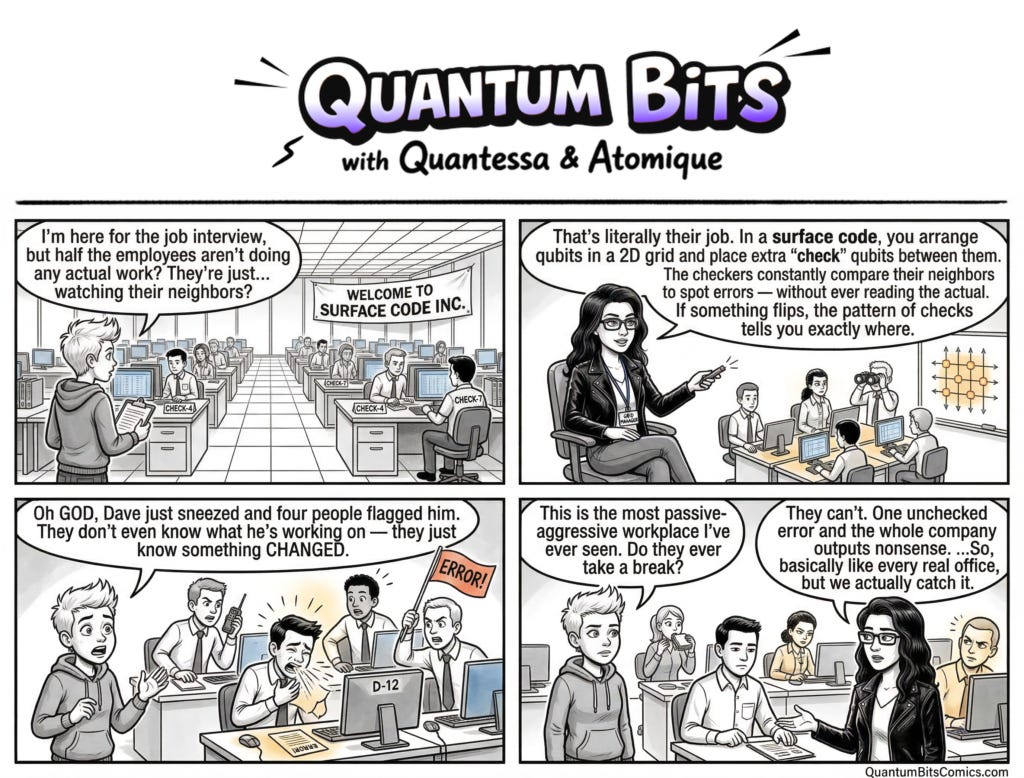
The surface code is the most widely studied quantum error correction scheme, and for good reason: it has a high error threshold (approximately 1% for standard noise models), meaning it can tolerate relatively noisy physical qubits compared to other codes. The post Surface Codes first appeared on quantumbitscomics.com .
Read the full comic on Quantum Bits Comics
D-Wave Advantage2 quantum computer mines cryptocurrency on Quip blockchain with significantly less energy than conventional computers
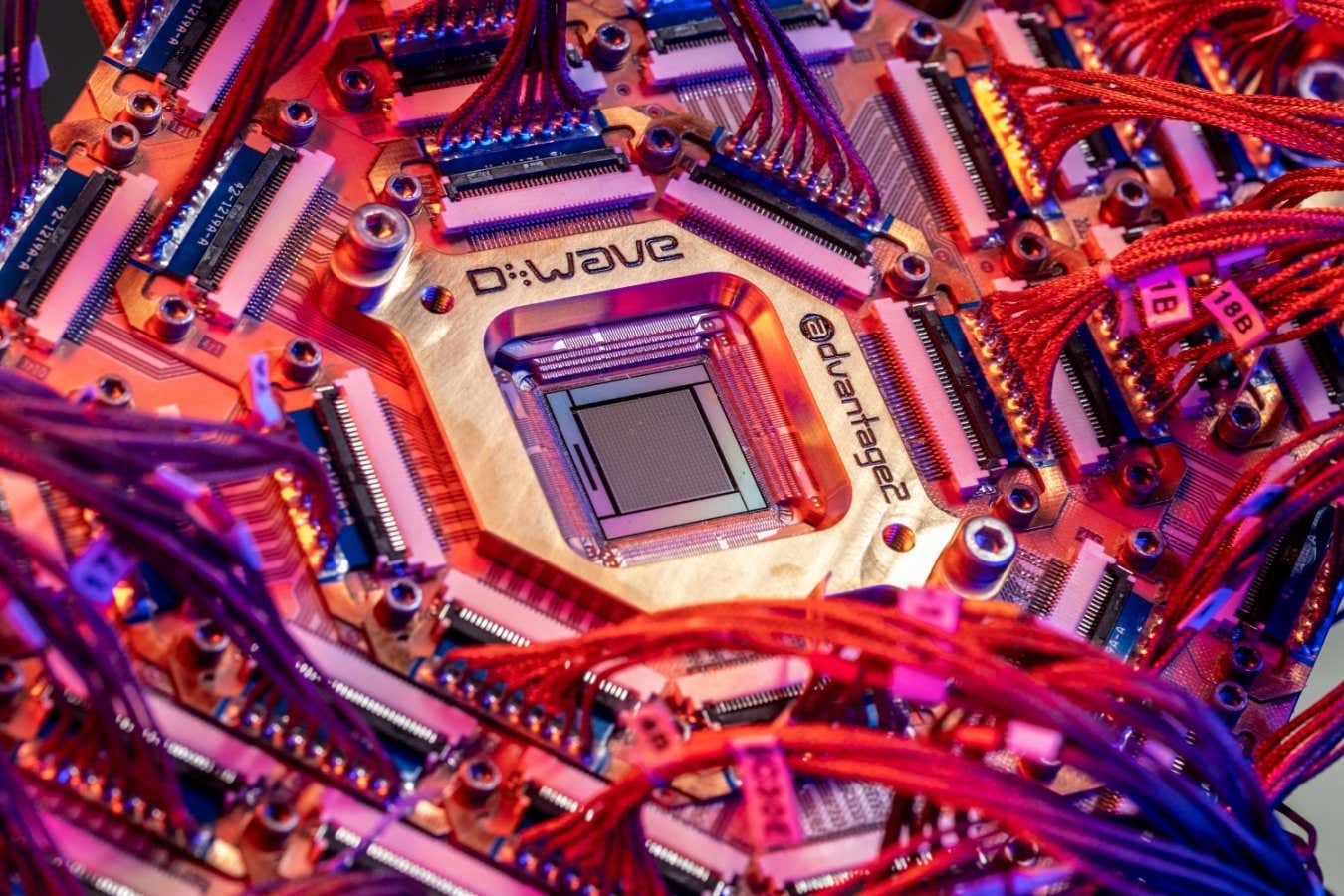
The Advantage2 quantum processing unit D-Wave A quantum computer is successfully mining cryptocurrency in the first experiment of its kind, while also using a lot less energy, researchers have claimed. While most of the computers participating in the Quip blockchain are conventional machines, the network also includes an Advantage2 computer built by D-Wave Quantum – and it seems to be beating the ordinary computers. Notably, in 2024, the firm claimed that one of its quantum computers had solved a problem that would otherwise be impossible for even a conventional supercomputer, but a different team of researchers reported performing a similar computation on a normal laptop just a year later.
D-Wave Quantum announces forthcoming gate-model quantum simulator with error-aware programming and future access requests
Enter the Era of Error-Aware Quantum Development D-Wave’s forthcoming gate model quantum computing simulator will combine error detection with real-time control and can help developers prototype novel error-aware applications, model quantum processor behavior, and explore advanced error correction approaches based on dual-rail qubits.
MIT and University of Ferrara researchers develop mathematical framework for designing distinguishable non-Gaussian quantum states
MIT and University of Ferrara researchers have developed a new mathematical framework to improve the distinguishability of quantum states—a key requirement for quantum sensing, communication, and computing. Their approach, detailed in Physical Review A, translates quantum states of light into algebraic varieties, enabling the precise design of non-Gaussian quantum states that are easier to differentiate. The team’s theory utilizes photon addition and subtraction operations, which create non-Gaussian states already producible in experiments.
Researchers and industry partners analyze energy demands and efficiency strategies for scaling quantum computers
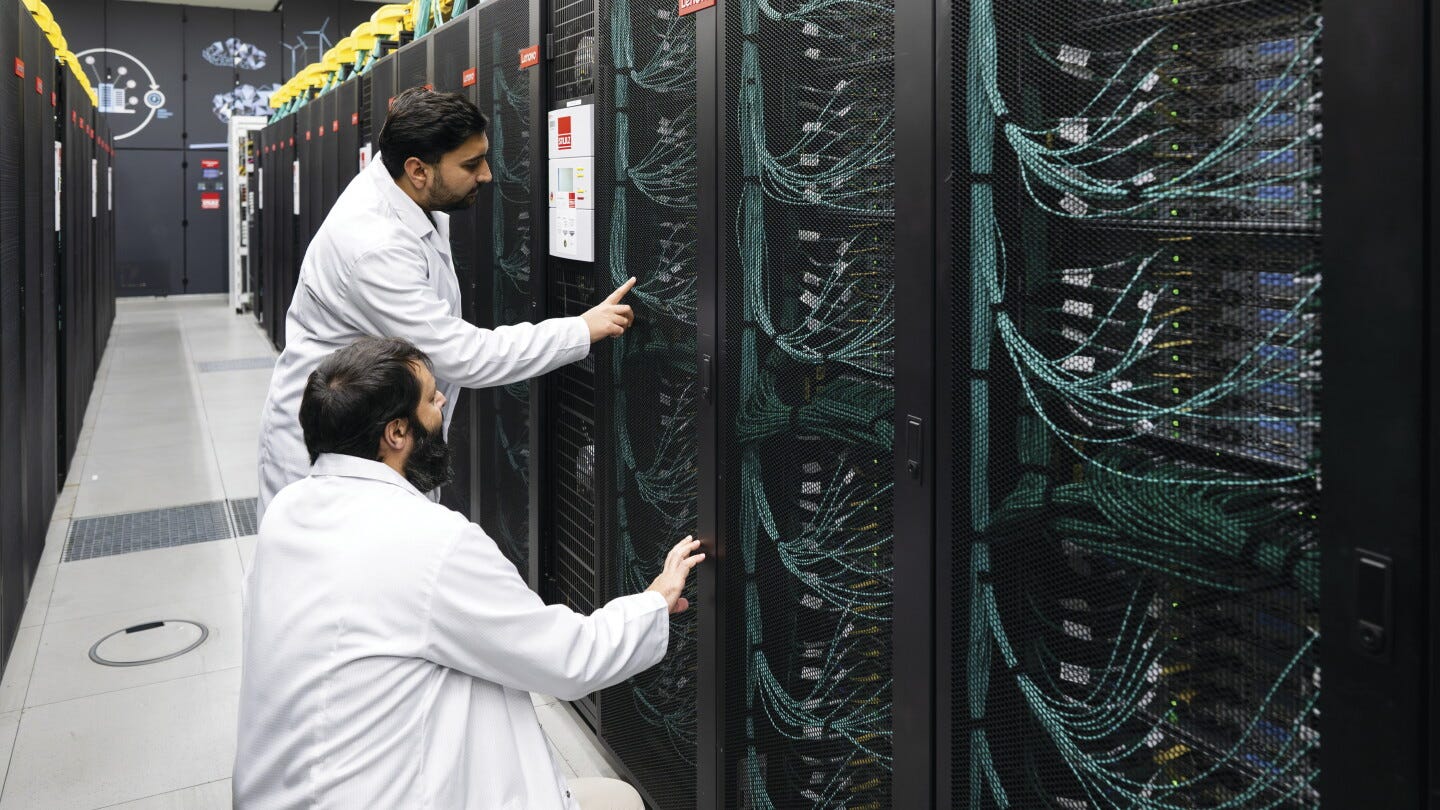
Scaling up quantum computing, and the energy it would take to do so, is an emerging topic in scientific circles. The cooling system accounted for approximately 80% of the power consumption of a noisy intermediate-scale superconducting quantum computer, according to a May preprint from a group of quantum computing researchers.
Passive quantum error correction doubles qubit lifetime, reaching break-even point
A team of U.S. researchers has designed a passive quantum error correction technique that enables qubits to correct their own errors. Demonstrated by Shruti Shirol and colleagues at the University of Massachusetts Amherst, the protocol transforms the inevitable dissipation of energy in qubit systems from a hindrance into an advantage, offering a promising route toward practical quantum computing outside the lab. The research has been published in Physical Review X.
Quantum hyperdimensional computing can work 500 times faster than other methods
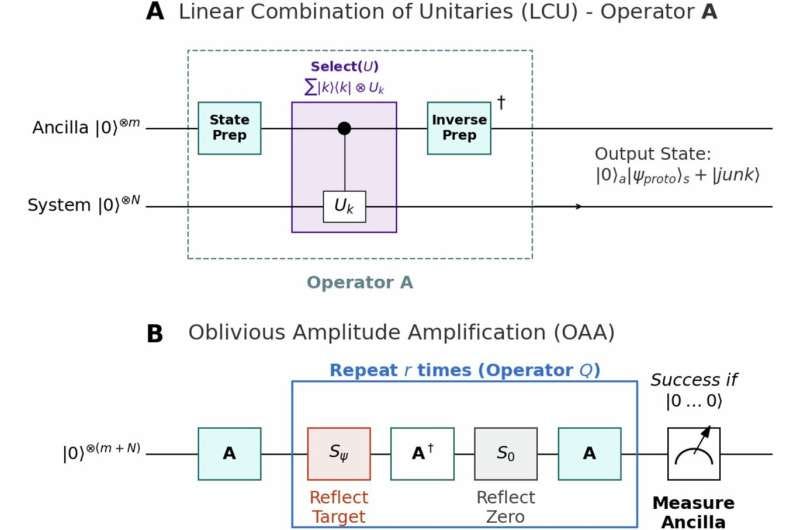
Cleveland Clinic researchers are unlocking quantum computing's full potential through the creation of a new computing paradigm inspired by the human brain. Fabio Cumbo, Ph.D., research associate in the lab of Daniel Blankenberg, Ph.D., associate staff, Computational Life Sciences, is developing the model, called quantum hyperdimensional computing (QHDC). Hyperdimensional computing is a type of computing based in neuroscience. It follows the idea that a concept in the brain is not stored on one single neuron. For example, when you think of a cat, there is no single neuron in your brain solely responsible for knowing what a cat is. That information is spread across thousands or millions of neurons, so if one neuron fails, you still remember what a cat is.
IQM Deploys Its First U.S. Quantum Computer at Oak Ridge National Laboratory
Pathfinder, a 20-qubit IQM Radiance system, is now operational at the home of Frontier, the world’s most powerful supercomputer for open science. It’s ORNL’s first commercially procured quantum computer and IQM’s first system on U.S. soil. It will be connected to high-performance computing systems in the National Center for Computational Sciences Technology Integration Group’s test bed. ORNL owns and operates the system on its own campus. IQM’s deployment model gives customers direct ownership and control of their quantum infrastructure, including the IP. IQM has sold 23 full-stack quantum systems worldwide, more on-premises systems than any other manufacturer.
Quantinuum unveils Helios, a 98-qubit trapped-ion quantum computer with all-to-all connectivity
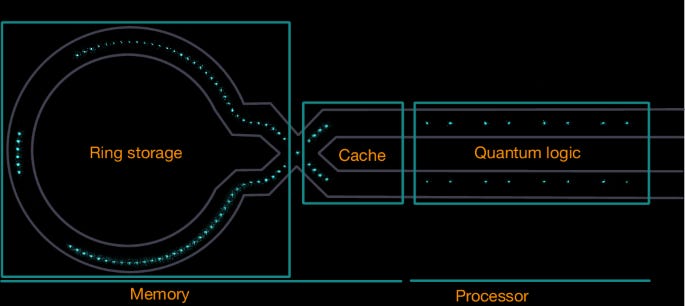
Quantinuum’s Helios is a 98-qubit trapped-ion quantum computer utilizing barium-137 ions and the quantum charge-coupled device (QCCD) architecture, featuring all-to-all qubit connectivity via a rotatable ion storage ring and an X-junction. With high two-qubit gate fidelities of 99.92% and scalable laser architecture, Helios advances the state-of-the-art in trapped-ion systems. Its architecture allows efficient parallelized operations, with an average infidelity of 7.9 × 10⁻⁴ for two-qubit gates and 2.5 × 10⁻⁵ for single-qubit gates. System benchmarks, including random circuit sampling, demonstrate Helios’ performance beyond classical simulation, establishing a new frontier for quantum computers.
Sandia National Laboratories and Quantinuum demonstrate 99.9% average two-qubit gate fidelity on Helios trapped-ion quantum system—serious hardware steps, hype free
Ppublic-private partnership in the Mountain West announced today new results that mark steady progress toward the Department of Energy’s goal of fault-tolerant quantum computing, systems large and reliable enough to solve complex problems.
Sandia National Laboratories photonics researcher Forrest Hubert aligns an experimental chip with an optical waveguide carrying laser light. Sandia collaborates with quantum computing company Quantinuum to develop and test similar technologies. Photo credit: Craig Fritz.
Sandia National Laboratories, home to the DOE’s longest running quantum computing program, and tech company Quantinuum published a paper today in the scientific journal Nature that reports the performance of the company’s 98-qubit commercial system, Helios
[PAPER] Duke University team automates VQE experiments on trapped-ion quantum computer—60,000 circuits run, 60% runtime cut, and 71% correlation energy recovered pre-quantum; serious workflow upgrade for academic labs, but hardware remains the bottleneck
![[PAPER] Duke University team automates VQE experiments on trapped-ion quantum computer—60,000 circuits run, 60% runtime cut, and 71% correlation energy recovered pre-quantum; serious workflow upgrade for academic labs, but hardware remains the bottleneck](https://substackcdn.com/image/fetch/$s_!GXug!,f_auto,q_auto:good,fl_progressive:steep/https%3A%2F%2Fsubstack-post-media.s3.amazonaws.com%2Fpublic%2Fimages%2F882b099d-fef3-4296-810c-2997065eb5db_685x481.png "[PAPER] Duke University team automates VQE experiments on trapped-ion quantum computer—60,000 circuits run, 60% runtime cut, and 71% correlation energy recovered pre-quantum; serious workflow upgrade for academic labs, but hardware remains the bottleneck")
Academic quantum computing platforms often face unique challenges in executing quantum workloads due to fragmented software environments and limited engineering support. The system successfully executed over 60,000 circuits across multiple molecular test cases with minimal human intervention, highlighting the framework’s effectiveness in enabling reproducible, resilient quantum experimentation in academic settings. Among the most promising of these is the variational quantum algorithm (VQA), a hybrid classical-quantum heuristic that operates on noisy gate-based quantum computers 5 , 6 , 7.
Origin Wukong quantum computer in China completes over 1 million computing tasks and demonstrates post-quantum cryptography framework
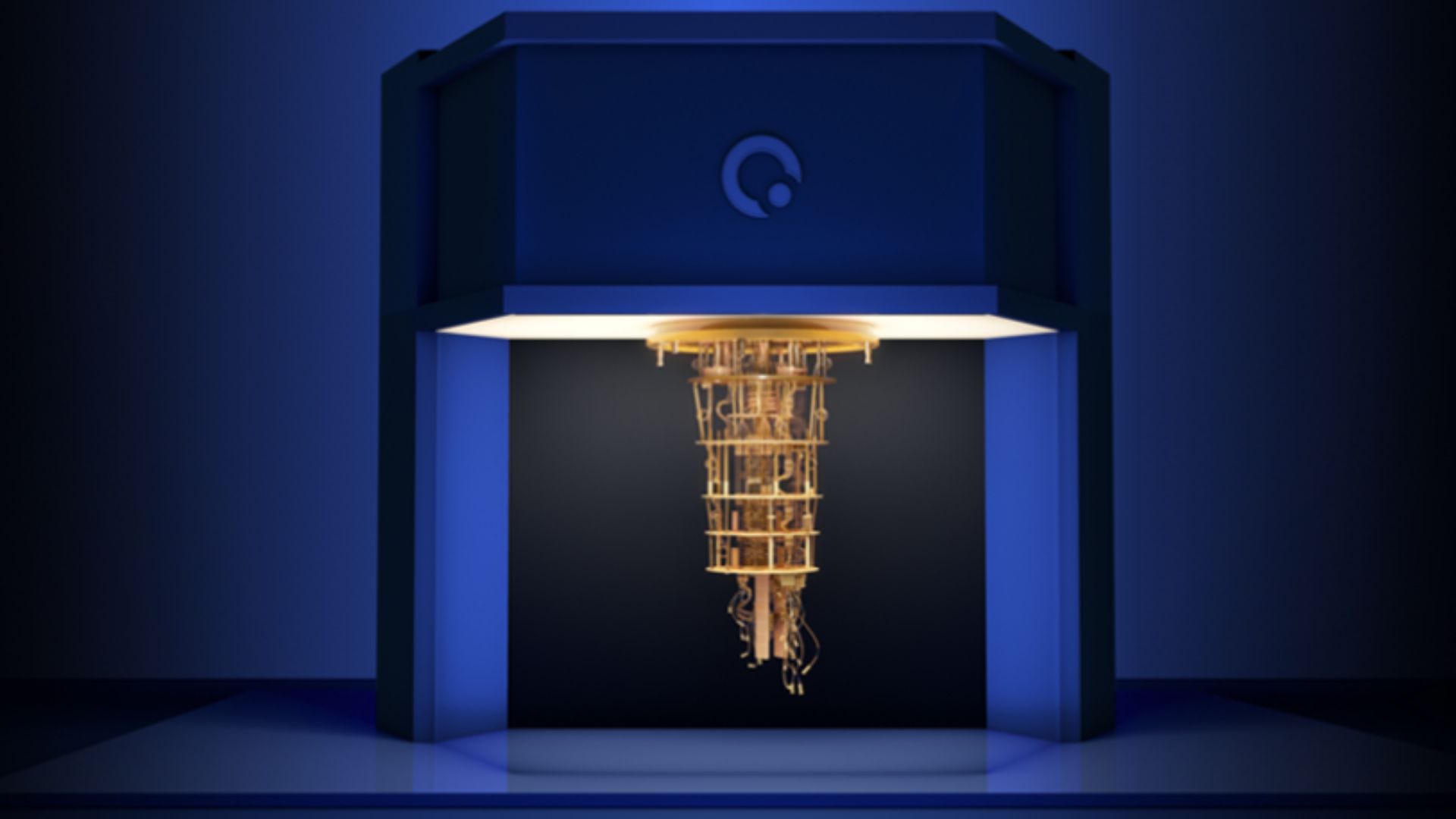
China’s Origin Wukong superconducting quantum computer, developed by OriginQC, has surpassed 1 million completed computing tasks, according to the Anhui Provincial Key Laboratory of Quantum Computing Chips and the Anhui Quantum Computing Engineering Research Center. Origin Wukong has been operational for over two years, serving users from more than 192 countries, and its PQC framework is being deployed across Chinese enterprises and public institutions. Notably, the system has also demonstrated China’s first post-quantum cryptography (PQC) protection framework, Origin Rock, designed to safeguard against both quantum and classical attacks.
Quobly raises €115 million Series A funding to industrialize silicon-based quantum computers

Quobly has announced the closing of a EUR115 million Series A financing to accelerate the industrialization of its silicon-based quantum computers and bring its first commercial product to market by the end of 2026, the French quantum computing company said.
Anhui Quantum Computing Engineering Research Center announces dual computing and security capabilities for Origin Wukong superconducting quantum computer
China’s domestically developed ‘Origin Wukong’ superconducting quantum computer has executed over 1 million quantum computing tasks with users globally and now integrates a post-quantum cryptography (PQC) framework, creating dual strengths in computational power and security. According to the Anhui Provincial Key Laboratory of Quantum Computing Chips and the Anhui Quantum Computing Engineering Research Center, the ‘Origin Wukong’ series has operated stably for over two years, receiving more than 49 million remote visits from 192 countries and regions. In April 2024, it launched China’s first PQC ‘anti-quantum attack shield,’ Origin Rock, capable of resisting both quantum and classical cyberattacks and already deployed across various enterprises and public institutions.
QuEra Computing announces Libra fault-tolerant quantum computer for 2028 and expands multi-year strategic collaboration with Amazon Web Services
QuEra Computing announced its first fault-tolerant quantum computer, Libra, which will be available via Amazon Braket in 2028 as part of an expanded multi-year partnership with AWS. Libra is designed as a megaquop-class system capable of executing around one million reliable logical quantum operations, with over 256 error-corrected logical qubits and a logical error rate of 10⁻⁶. This system aims to enable early commercial and research quantum workflows in fields such as molecular simulation and materials discovery.
Alice & Bob lands French government deal to deploy 100-qubit cat-qubit system at GENCI supercomputing center
Following the announcements made by the President of the French Republic on May 22 at the CEA’s Très Grand Centre de Calcul (TGCC) regarding the second phase of France’s National Quantum Strategy (SNQ), GENCI (Grand Équipement National de Calcul Intensif) and French quantum computing company Alice & Bob signed an agreement at VivaTech on June 17, in the presence of representatives of the French government, for France’s acquisition of an 18-cat-qubit quantum computer.
Atom Computing and Nu Quantum announce partnership to develop scalable, photonic-networked quantum computers
Atom Computing and Nu Quantum have announced a strategic partnership to develop scalable, utility-scale quantum computers by integrating Atom Computing’s neutral-atom quantum processors with Nu Quantum’s photonic networking hardware. The collaboration, formalized by a Memorandum of Understanding, focuses on technologies such as integrated photonics network switches, qubit-photon entanglement, and distributed fault-tolerant architectures. Atom Computing recently demonstrated progress with quantum error correction and notable contracts, while Nu Quantum raised a record $60 million Series A round for quantum networking.
IonQ launches Clavis XG Multiplex to enable scalable quantum security deployment on metropolitan fiber networks
IonQ has announced Clavis XG Multiplex, a new product within its Clavis XG Quantum Key Distribution (QKD) portfolio aimed at enabling the practical deployment of quantum security across metropolitan fiber networks. The solution allows simultaneous quantum and classical data transmission over existing infrastructure without redesigning networks, thereby reducing costs and facilitating enterprise-grade integration. IonQ positions this release as a step forward in scalable, real-world quantum security deployment for organizations handling sensitive data.
INNOSPACE and Norma agree to jointly demonstrate quantum computing hardware in orbit
INNOSPACE, a South Korean satellite launch provider, has signed an MOU with local quantum computing firm Norma to enable in-orbit quantum hardware demonstrations and lay foundations for a Space Quantum Computing Center. The initiative involves integrating Norma’s compact Quantum Processing Unit (QPU) payload directly onto INNOSPACE’s HANBIT rocket for testing under harsh space conditions. The operational data from these flights will inform the development of a cloud-linked infrastructure hub dedicated to quantum-enhanced satellite operations.
Quantum Computing Inc. and Planck Dynamics sign framework agreement for NeuraWave photonic reservoir computer deployment in AI applications
QCi has entered into a framework agreement with Planck Dynamics, backed by NUNC Capital BV, to deploy its NeuraWave photonic reservoir computer as a foundational platform for next-generation AI applications. The initial order comprises five NeuraWave systems, with potential for up to 100 units and a total value exceeding $10 million, contingent on milestone achievements.
Amazon executive Peter DeSantis predicts first commercially useful quantum computers in five to seven years
Amazon’s top AI executive, Peter DeSantis, forecasts that the first ‘commercially useful’ small-scale quantum computers will emerge within five to seven years. Amazon recently made advances in error correction with its Ocelot quantum chip, and DeSantis’ estimate positions Amazon mid-range among industry peers’ predictions. DeSantis told CNBC that after this breakthrough, the technology will scale rapidly, likening its growth to Moore’s Law.
AIX Global Innovations demonstrates fault-tolerant quantum computing with chemical accuracy across molecules on IBM Heron quantum processors
This paper reports the first end-to-end fault-tolerant quantum computing stack to clear all four strict-FTQC requirements simultaneously on commodity superconducting NISQ silicon, rented through standard IBM Quantum cloud subscription with no purpose-built research machine, no custom decoder, and no magic-state distillation factory. The four requirements: (i) surface-code quantum error correction at distance d≥3 with logical-error rate below the unencoded baseline; (ii) a universal Clifford+T gate set executed via magic-state injection, with no arbitrary angle physical rotation carrying non-Clifford content on the wire (the algorithm-determined non-Clifford angle never fires on the silicon; the native RZ(θphys) on Heron fires only at Clifford-multiple angles required to compose H, S, T); (iii) heterogeneous primitive composition (teleportation, lattice-surgery CNOT, T-gate, logical memory) on a persistent encoded register; and (iv) runtime admissibility verification on every committed result. All five chips, five chemistry workloads spanning four molecules, and twenty-two governed runs in this paper were executed on the same primitive engine without architectural change.