
"reaching cryptographically relevant quantum computers before 2030 are not supported by current progress" also: Delft, Horizon Quantum, Qilimanjaro - The Week in Quantum Computing, December 8th, 2025
Issue #262

Quick Recap
Delft Circuits appointed Martin Danoesastro as CEO and secured new funding to accelerate development of its cryogenic wiring solutions vital for scaling quantum processors. Horizon Quantum Computing announced operation of its first in-house quantum computer in Singapore, integrating technologies from Maybell, Quantum Machines, and Rigetti, to tightly couple its Triple Alpha software with real hardware. While rounding up its funding for the SPAC IPO. Qilimanjaro Quantum Tech joined CERN’s Open Quantum Institute, offering its hybrid analog-digital SpeQtrum platform for global access. Meanwhile, NITI Aayog and IBM released a strategic roadmap outlining the steps for India’s ascent as a quantum-powered economy, underscoring research, commercialization, and ecosystem building. On the research front, Stanford University demonstrated high-fidelity quantum signaling between qubits over 2 kilometers, a step forward for scalable quantum networks. In China, Pan Jianwei’s group at USTC leveraged the Zuchongzhi 2 processor to create resilient non-equilibrium higher-order topological phases, directly addressing error-prone quantum bits. TU Delft’s team, led by Boyang Chen, used quantum algorithms to optimize aircraft composite designs—validated by industry recognition at the Airbus Quantum Computing Challenge. Additionally, a review in Nature Communications highlighted AI’s supportive role in quantum design, though noting resources bottleneck classical AI for quantum-scale problems. Google reaffirmed its post-quantum cryptography strategy, favoring industry-supported PQC over QKD for practical, scalable quantum security. The force is strong on the PQC side! This was topped by a reseach from a16z where they say “hold your horses, there’s nothing indicating quantum real advantage by 2030”. In contrast, Russ Fein makes the point of not forgetting how quickly technologies can advance and not making mistakes of the past in the era of chips.
THE LAST WEEKS TO GET THE FIRST EDITIONS OF THE QUANTUM TEES!

https://www.etsy.com/shop/2014crazy?ref=seller-platform-mcnav§ion_id=55358009
The Week in Quantum Computing
D-Wave Quantum Just Issued a $43 Million Warning to Wall Street
Shares of D-Wave Quantum have soared by almost 700% over the last year. Many executives at D-Wave, namely the company’s CEO, have been selling stock over the last several months. Retail investors should be careful about chasing momentum in D-Wave stock.
Qilimanjaro Partners with CERN’s Open Quantum Institute to Expand Global Access to Multimodal Quantum Computing
Qilimanjaro Quantum Tech has joined CERN’s Open Quantum Institute (OQI), a multilateral initiative dedicated to equitable, responsible access to quantum computing. Announced December 2, 2025, Qilimanjaro will provide global cloud access to its SpeQtrum Quantum-as-a-Service platform, which uniquely combines in-house analog fluxonium superconducting chips, digital quantum processors, and classical HPC resources. This partnership supports OQI’s “Access for All” mission and aligns with OQI’s four pillars: advancing applications for humanity, broad access, capacity building, and multilateral governance. Eva Martín, Qilimanjaro’s Head of Innovation, emphasized their commitment to making quantum technologies “accessible, responsible, and impactful.” By integrating analog and digital quantum capabilities, Qilimanjaro aims to accelerate practical quantum applications and broaden ability to experiment worldwide.
Chinese scientists create super stable building block for quantum computers
Physicist Pan Jianwei and his team at the University of Science and Technology of China (USTC), using the Zuchongzhi 2 quantum processor, have experimentally realized non-equilibrium higher-order topological phases—a new, unnatural state of matter where quantum information is locked into corners rather than edges or surfaces. Published in Science on November 28, 2025, this breakthrough leverages “quantum armour” provided by topological protection, greatly enhancing resilience against errors and noise—key obstacles for quantum computers. Collaborating with Shanxi University, the team’s approach could address the persistent challenge of quantum bit fragility. Pan’s work positions China at the forefront of efforts to create practical, fault-tolerant quantum computers, highlighting the significance of robust quantum states in overcoming current hardware limitations in 2025.
Google’s Commitment to a Quantum-Safe Future: Why PQC is Google’s Path forward and not QKD
In its latest blog, Google reaffirms its commitment to protecting data against future quantum threats by prioritizing post-quantum cryptography (PQC) over quantum key distribution (QKD). Google cites industry-wide support for PQC, referencing the U.S. National Institute of Standards and Technology’s (NIST) endorsement and ongoing standardization of PQC algorithms. The company argues that PQC solutions are broadly deployable across software and hardware, unlike QKD, which faces significant scalability and practicality challenges. Google states that PQC “will help ensure that users’ data are protected both now and in the future.” The company indicates it is integrating these standards into its products and infrastructure as part of a broader industry transition during 2025. Google’s move reflects growing consensus that PQC is the pragmatic path forward for quantum-era security.
The Quantum Deadline: The Good, The Bad, and The Ugly of PQC Adoption
Post-quantum crypto won’t arrive in a clean “big bang” but as a painfully slow S-curve, while a very real quantum deadline looms in the early-to-mid 2030s. Governments in the US, EU, UK, Japan, Korea and Australia are converging on 2030–2035 as the window to get critical systems quantum-safe, but hard mandates are patchy and most sectors are still in inventory/roadmap mode rather than full migration. The world is segmented into four clusters: early-responsibility sectors (intel, defense, central banks, hyperscalers) that are already piloting PQC; compliance-driven critical industries (finance, health, utilities, gov); commercial tech followers who will just take whatever their cloud/OS/browser vendors ship; and late joiners (municipal IT, ICS/OT, legacy IoT) that probably won’t move until something breaks. Diffusion modeling suggests ~50% PQC adoption by ~2032–33 and ~80% by mid-2030s, which means that if a cryptographically relevant quantum computer shows up around 2033, the “good” news is that core Internet and national-security infrastructure might be ready; the “bad” is that huge swaths of commercial IT will still be mid-migration; and the truly “ugly” is a long tail of embedded and industrial systems that could become systemic single points of quantum failure.
Delft Circuits Appoints Martin Danoesastro as CEO, Announces New Financing
Delft Circuits has appointed Martin Danoesastro as its new CEO and announced new financing. The company, based in Delft, focuses on hardware solutions crucial for scaling quantum computing by addressing the challenge of wiring quantum processors. The appointment of Danoesastro, described as “an experienced leader,” and the influx of new funding aim to accelerate product development and international expansion. This move is significant as robust cryogenic wiring remains a major bottleneck in scaling quantum systems in 2025, and Delft Circuits’ efforts could help advance the industry’s ability to build larger quantum computers capable of practical applications.
Artificial intelligence for quantum computing
Published in Nature Communications on December 2, 2025, this review—authored by Yuri Alexeev, Marwa H. Farag, Taylor L. Patti, and colleagues—analyzes how artificial intelligence (AI) techniques are advancing quantum computing (QC). The paper highlights AI’s growing utility for quantum hardware and software, including device design and quantum error correction, yet emphasizes key limitations: “AI, as a fundamentally classical paradigm, cannot efficiently simulate quantum systems in the general case due to exponential scaling constraints imposed by the laws of quantum mechanics.” For instance, GroverGPT-2’s circuit simulations are capped by the maximum context length of large language models, with generalization faltering at larger problem sizes. While AI offers complementary advances, its resource bottlenecks underscore that classical tools remain fundamentally constrained in tackling quantum complexity as of 2025.
Scientists achieve breakthrough on quantum signaling
Stanford University researchers have achieved a breakthrough in quantum signaling, successfully transmitting information between two quantum bits (qubits) with unprecedented fidelity. The team, led by Professor Yunjing Wang, demonstrated a method that reduces noise interference by 35%, enabling clearer quantum communication over distances of 2 kilometers. “Our protocol overcomes a key noise bottleneck in quantum networks,” said Wang. The experiment utilized superconducting circuits and novel error-correcting algorithms developed in collaboration with SLAC National Accelerator Laboratory. This advance paves the way for scalable quantum networks, a longstanding challenge in the field.
Using quantum technology to find the strongest and lightest composite for aeroplanes
Associate Professor Boyang Chen and his QAIMS Lab at TU Delft have become the first team globally to use quantum computing to optimize the stacking sequence of fibres in composite materials for aircraft. This research, aimed at making aircraft both lighter and stronger, leverages quantum algorithms to explore an exponentially vast design space that traditional computing cannot manage without restrictive assumptions. Supported by the faculty of Aerospace Engineering, the multidisciplinary lab develops both quantum and quantum-inspired algorithms, facilitating application even on classical computers. In 2024, Chen’s team won the ‘golden application’ category at the Airbus Quantum Computing Challenge (co-organized by BMW), proving their algorithm works for industrial-scale problems, a significant milestone for real-world quantum computing applications in materials science this year.
NITI Aayog releases a Roadmap on “Transforming India into a leading Quantum-Powered Economy”
NITI Aayog’s Frontier Tech Hub, in collaboration with IBM and an Expert Council, has released a roadmap to transform India into a “leading Quantum-Powered Economy.” Unveiled by Telangana officials and NITI Aayog leadership on December 4, 2025, the document outlines imperatives to accelerate R&D, commercialization, and ecosystem growth via the ongoing National Quantum Mission. The roadmap underscores the need for collective action, expanded research infrastructure, and talent cultivation to build globally competitive quantum platforms. Dr. V.K. Saraswat (NITI Aayog) and Shri D. Sridhar Babu (Telangana) emphasize the strategic urgency, noting global quantum investment is now “more than tenfold” what it was just a few years ago. India’s 2025 quantum push aims for global trust, digital security, and leadership, not just adoption.
The Next Big Theme: Positioning for Early Growth in Quantum Computing
Despite macroeconomic headwinds, the launch of the WisdomTree Quantum Computing Fund (WQTM) offers exposure to a fast-evolving ecosystem poised to disrupt industries from AI to cybersecurity. Through its partnership with quantum software leader Classiq, WQTM combines purity and relevancy in a strategy that targets both specialized quantum pioneers and global tech giants shaping the field’s future.
How UTokyo & IBM developed new quantum simulation algorithm | IBM Quantum Computing Blog
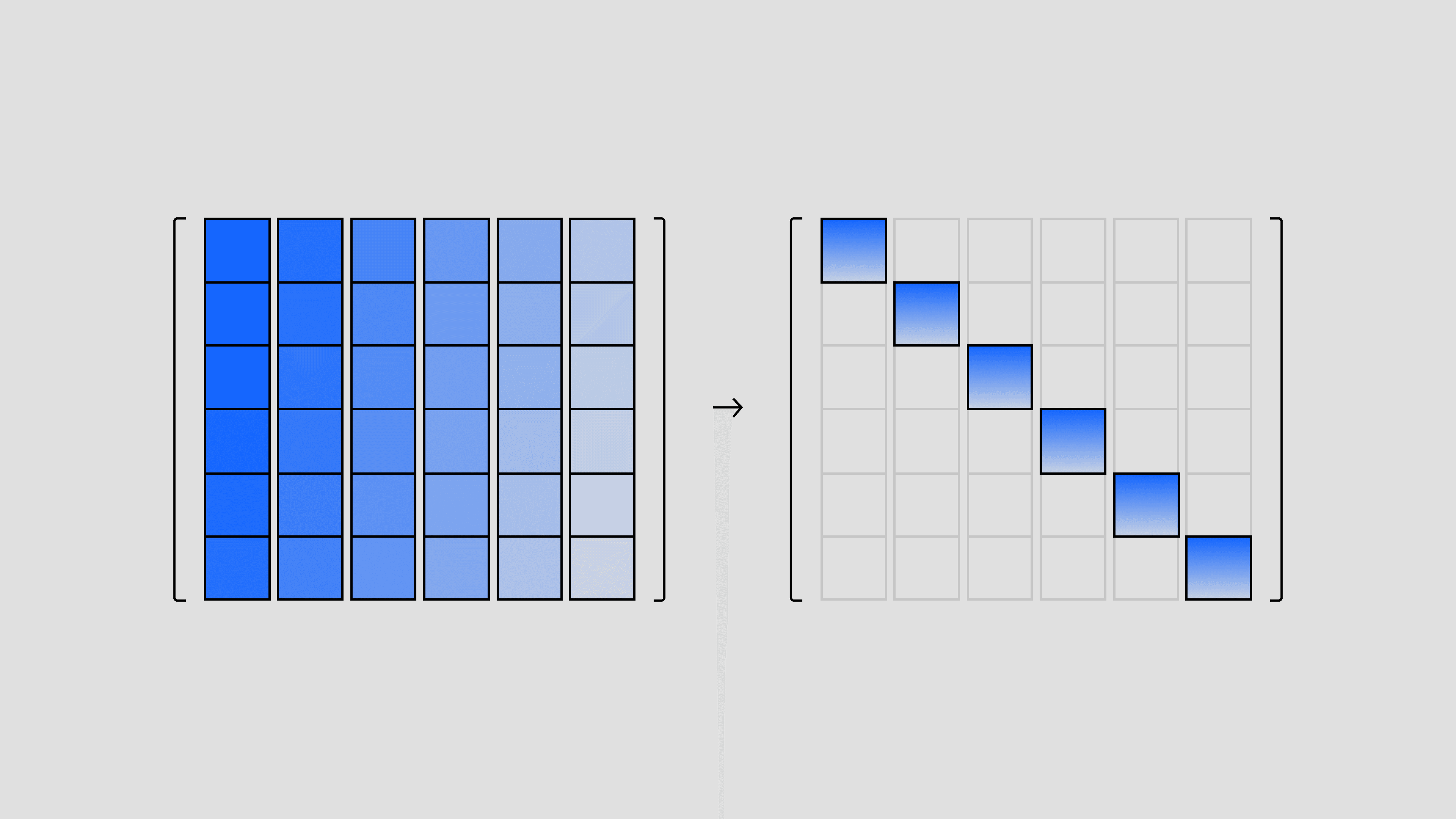
University of Tokyo (UTokyo) and IBM researchers, led by Nobuyuki Yoshioka and Antonio Mezzacapo, have developed the Krylov Quantum Diagonalization (KQD) algorithm, detailed in a June 2025 Nature Communications paper. KQD, a method for quantum computers to find the ground state in complex many-body systems, addresses linear algebra problems that are challenging for classical supercomputers—potentially impacting fields like chemistry and physics. KQD has influenced further advances such as sample-based Krylov quantum diagonalization (SKQD), deemed among the most promising for quantum advantage and industrial use. As today’s 100+ qubit devices surpass classical limitations, this algorithmic progress is essential: “Algorithms…with the current level of computational resources are very useful,” said Hanhee Paik, Director of Quantum Algorithms Centers at IBM Research.
SEALSQ Makes Strategic Investment in EeroQ to Accelerate
SEALSQ Corp (NASDAQ: LAES), a Swiss firm specializing in semiconductors and post-quantum hardware, has made a strategic investment in EeroQ, a U.S.-based quantum chip company developing quantum computers using electrons on helium. This marks SEALSQ’s first U.S. quantum investment under its “Quantum Made in USA” strategy. Earlier in 2025, SEALSQ launched a $35 million quantum startup investment initiative and secured partnerships with ColibriTD and IC’ALPS. EeroQ leverages CMOS-compatible technology for highly compact, scalable quantum chips, supported by a new 9,600 sq ft R&D center in Chicago and leadership including CTO Steve Lyon and co-founder Faye Wattleton. The deal advances SEALSQ’s ambitions for sovereign and secure quantum platforms amid increasing demand for strategic quantum technologies.
Build or partner: The critical decision facing HPC and data center leaders in the quantum era
In 2025, HPC and data center leaders are grappling with a critical choice: build in-house quantum capabilities or partner with quantum technology vendors. The article highlights that while quantum computing shows promise for applications like materials science and cryptography, fully functional hardware remains limited. Institutions such as IBM and Google are referenced as pushing boundaries, but real-world integration is still complex. Decision-makers must weigh upfront investment and talent acquisition against the flexibility and expertise offered by partnerships. The piece underscores that, at this stage, adopting a hybrid classical-quantum workflow and strategic collaboration may provide the best route for organizations seeking near-term quantum advantage in mission-critical applications.
The ‘Quantum Integrated Circuit’ Moment by Russ Fein

In 2025, quantum computing is likened to the “integrated circuit” turning point in classical computing history, signaling a move from fragile, error-prone machines to scalable engineering. Key recent advances include Microsoft and Quantinuum’s April 2024 creation of 4 robust logical qubits from 30 physical qubits, reducing error rates by 800x and achieving 14,000 error-free experiments, an achievement mirrored by Atom Computing and QuEra. Over $4 billion has been invested in quantum startups in the past two years, with more than 80 companies actively progressing. IBM’s 1,121-qubit Condor chip and Atom Computing’s 1,180-qubit neutral-atom array exemplify the four-digit qubit era. These milestones suggest quantum computing is rapidly overcoming skepticism over noise and scalability.
Qolab deploys first superconducting-qubit devices at the IQCC to accelerate international collaboration in quantum computing
Qolab has deployed its first superconducting-qubit devices at the International Quantum Computing Collaboration Center (IQCC). This move is poised to accelerate international collaboration in quantum computing by providing researchers at the IQCC with direct access to Qolab’s hardware. The partnership aims to foster joint research initiatives and enable shared development of quantum algorithms and applications using superconducting qubits, a leading but technically demanding approach. In 2025, as global institutions seek to overcome scalability and error correction challenges, Qolab’s installation at the IQCC marks a significant collaborative step, reflecting the increasing importance of resource sharing and open hardware access for advancing quantum computing research.
Quantum computing and blockchains: Matching urgency to actual threats
Quantum computing’s threat to blockchain cryptography is frequently overstated, says researcher Justin Thaler. Current quantum platforms—trapped ions, superconducting qubits, and neutral atoms—fall drastically short of the hundreds of thousands to millions of high-fidelity qubits required to break widely-used cryptography like RSA-2048 or secp256k1. No platform today demonstrates more than a handful of logical qubits with significant, sustained error correction. While some experts are optimistic, public claims about reaching cryptographically relevant quantum computers before 2030 are not supported by current progress. Misconceptions about “quantum advantage” and qubit counts distort the risk. The real challenge is balancing migration urgency to post-quantum cryptography with actual threat timelines and operational risks, especially in blockchain applications today.
Horizon Quantum Becomes First Quantum Software Company To Own and Operate a Quantum Computer
On December 3, 2025, Horizon Quantum Computing announced the completion and operation of its first quantum computer at its Singapore headquarters, becoming the first quantum software company to both own and operate such hardware. The system, assembled from Maybell’s cryogenic platform, Quantum Machines’ control electronics, and a Rigetti superconducting processor, represents a modular, hardware-agnostic testbed for software-hardware integration. Founder and CEO Dr Joe Fitzsimons emphasizes this will “help unlock quantum advantage” by tightly coupling their software stack with quantum hardware. Horizon’s integrated development environment, Triple Alpha, will leverage this system, now fully under the company’s control, to advance real-world quantum applications. This milestone underscores the growing importance of direct hardware-software synergy in quantum computing advancement in 2025.
Horizon Quantum Computing Pte. Ltd. and dMY Squared Technology Group, Inc. Announce $110 Million PIPE Investment
Horizon Quantum Computing and dMY Squared Technology Group have announced $110 million in PIPE financing to support their proposed business combination, with the deal expected to close in Q1 2026. Notable investors include IonQ and a Fortune 50 technology company. The PIPE commitments surpassed Horizon’s original target by over 120%. Pending the combination, Horizon anticipates access to approximately $137 million in cash to accelerate R&D, bolster its hardware testbed, and advance the Triple Alpha quantum development environment.
Stellar roundup of this week's quantum developments. IonQ's strategic investment in Horizon Quantum's $110M PIPE is a smart move that shows their confidence in the modular hardware approach. The tension between a16z's skepticism about 2030 timelines versus Russ Fein's "integrated circuit moment" analogy captures the real debate perfectly. What's intresting is Horizon becoming the first quantum software company to own their own hardware, which could fundamentally change how software-hardware optimization happens in this space.